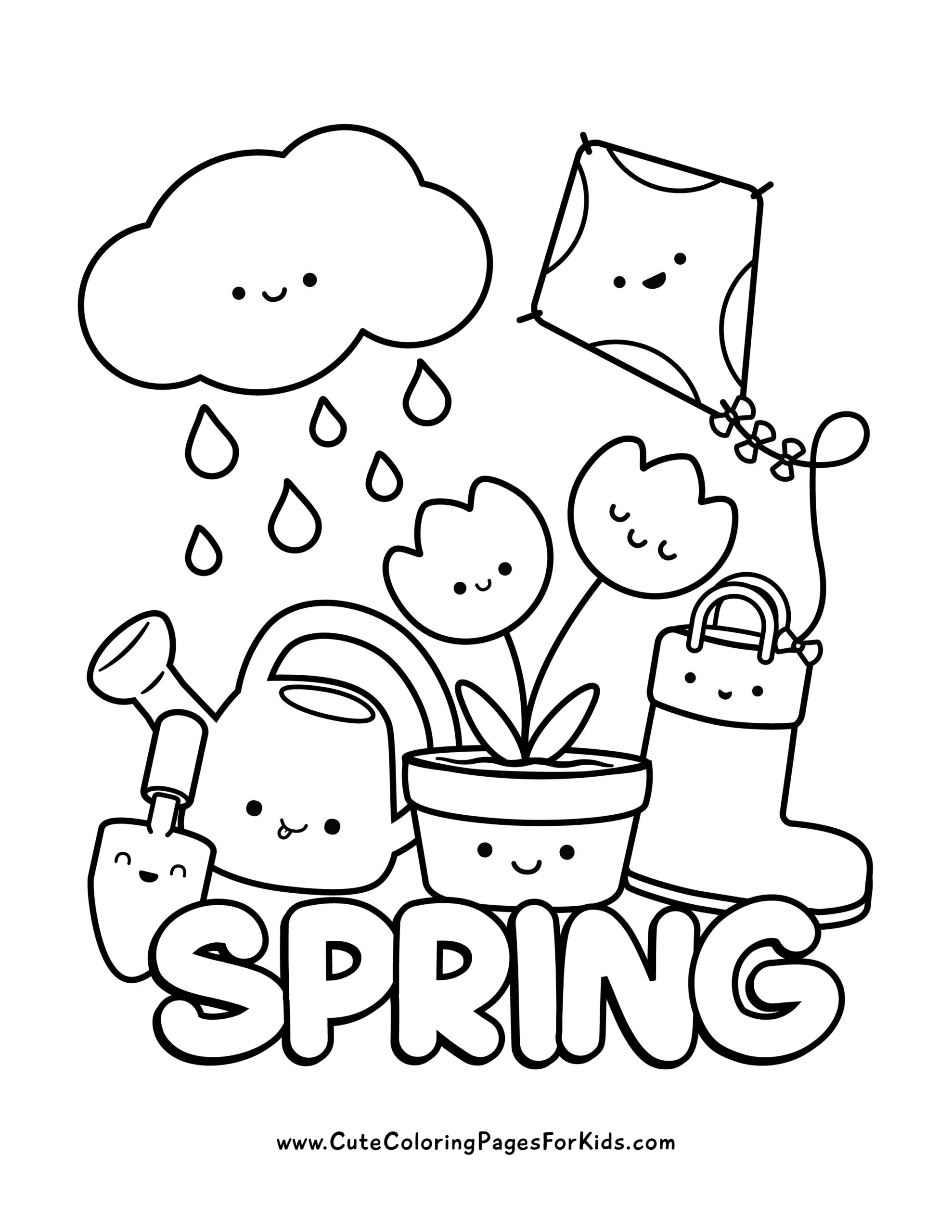
Embracing Nature's Reawakening: The Magic of Spring Coloring Pages For Kindergarten
As the last chill of winter recedes, a world of vibrant colors and renewed life emerges. Spring, a season synonymous with fresh beginnings and blossoming beauty, offers countless opportunities for children to explore and learn. For our youngest learners, kindergarteners, there's a particularly delightful way to engage with this enchanting season: through spring coloring pages for kindergarten. These simple yet powerful tools transcend mere entertainment, becoming gateways to creativity, cognitive development, and a deeper appreciation for the natural world.
Imagine a sun-drenched meadow, teeming with cheerful flora and fauna, all waiting to be brought to life with a splash of color. This is the world that spring coloring pages unfold for children. From the moment they pick up a crayon, kindergarteners are not just filling in lines; they are embarking on an artistic journey that nurtures their imagination and fine motor skills, while simultaneously immersing them in the wonders of spring's renewal. It's a fundamental activity that bridges the gap between playful exploration and essential early learning, making it an invaluable resource for parents and educators alike.
Beyond the Lines: Educational Benefits of Spring Coloring Activities
The act of coloring might seem straightforward, but for kindergarten-aged children, it's a rich tapestry of developmental milestones. Spring coloring pages for kindergarten are specifically designed to cater to their growing abilities, offering a myriad of educational advantages:
- Enhancing Fine Motor Skills: Gripping a crayon, staying within the lines, and applying varying pressure all contribute to strengthening the small muscles in a child's hands and fingers. This precision and control are crucial for future tasks like writing, tying shoelaces, and buttoning clothes.
- Boosting Hand-Eye Coordination: As children visually track the outlines and guide their coloring tool, they are refining the intricate connection between what their eyes see and what their hands do. This coordination is vital for sports, reading, and many daily activities.
- Nurturing Creativity and Self-Expression: Coloring pages provide a structured yet open-ended canvas. While the images are pre-drawn, the choice of colors, patterns, and even the stories children create around their artwork allows for immense creative freedom and a healthy outlet for emotional expression.
- Improving Focus and Concentration: In a world brimming with distractions, sitting down to complete a coloring page demands sustained attention. This quiet focus helps children develop patience and the ability to concentrate on a task, skills that are foundational for academic success.
- Developing Color Recognition and Identification: Spring pages are typically bursting with opportunities to identify and differentiate between a wide spectrum of colors. Discussions about "What color is the sky?" or "What color should the tulips be?" reinforce color vocabulary and understanding.
- Early Cognitive Development: Engaging with themes like "What comes next?" (e.g., butterfly emerging from a chrysalis) or identifying different objects (e.g., types of flowers, insects) subtly introduces scientific concepts and encourages observational skills.
For more insights into how these activities enhance fundamental skills, you might find our article Spring Coloring Pages for Kindergarten: Enhance Creativity & Focus particularly useful.
Unveiling Nature's Splendor: Common Spring Coloring Themes
The beauty of spring coloring pages for kindergarten lies in their ability to capture the essence of the season through universally appealing imagery. These pages often feature a delightful array of elements that celebrate nature's renewal:
The Radiant Sun and Whispering Clouds
A smiling sun beaming down is a universal symbol of warmth, life, and energy. It signifies the end of winter's dormancy and the awakening of nature. Fluffy white clouds drifting across an azure sky add a touch of whimsy, inviting children to imagine shapes and stories. This imagery helps children connect to the concept of weather and the life-giving power of the sun.
The Arc of Hope: Rainbows
Few things captivate a child's imagination like a rainbow. Often associated with hope and promise, its vibrant spectrum embodies the beauty and diversity of the natural world. Coloring a rainbow offers a perfect opportunity to teach children about color order and the magic of light.
Blooming Wonders: Flowers and Foliage
The ground teems with life, especially blooming flowers. While tulips (symbolizing perfect love and celebrations) are often a central feature, other spring favorites like daffodils (new beginnings), crocuses (cheerfulness), and cherry blossoms (transience and beauty) also make appearances. Children learn about different plant structures and the joy of a garden coming to life.
Busy Bees and Beautiful Butterflies
Playful butterflies, undergoing remarkable metamorphosis, represent transformation and rebirth. Their intricate wing patterns offer a challenge and a reward for careful coloring. Busy bees, vital pollinators, embody hard work, community, and the sweetness of life, teaching children about the interconnectedness of ecosystems. These tiny creatures are perfect for sparking curiosity about insects and their roles in nature.
Chirping Robins and Flowing Streams
A friendly robin perched on a budding branch is a common harbinger of spring, signifying new beginnings and the return of light. Its melodious tune adds an auditory dimension to the visual experience. A small, babbling brook meandering through the meadow reflects the clear sky and represents the continuous flow of life and change. These elements introduce children to various animals and natural landscapes.
Each of these elements holds cultural and symbolic significance, allowing children to connect with a rich tapestry of meanings associated with the spring season. Engaging with these symbols through coloring helps broaden their understanding of the world around them.
Maximizing the Fun and Learning: Tips for Using Spring Coloring Pages For Kindergarten
To truly unlock the potential of spring coloring pages for kindergarten, consider these practical tips for integrating them into your child's learning and play:
- Encourage Discussion: As your child colors, ask open-ended questions like, "What colors are you choosing for the butterfly and why?" or "What do you think the robin is singing about?" This fosters imagination and language development.
- Connect to Real-World Experiences: After coloring a page with tulips, take a walk outside to spot real tulips. Point out bees buzzing around flowers or listen for birdsongs. This reinforces learning and makes the abstract concrete.
- Vary Coloring Mediums: While crayons are a classic, introduce markers, colored pencils, or even watercolors for different textures and experiences. This helps develop diverse artistic skills and sensory exploration.
- Storytelling Prompts: Once a page is colored, encourage your child to tell a story about the scene. "What adventures are the bees having today?" or "Where is the rainbow leading?" This boosts narrative skills and creative thinking.
- Display the Artwork: Proudly display your child's finished spring coloring pages. This validates their effort, builds self-esteem, and creates a cheerful, spring-themed environment.
- Vocabulary Building: Use the coloring session to introduce new words related to spring, such as "blossom," "nectar," "metamorphosis," "meadow," or "vibrant."
- Integrate with Other Activities: Combine coloring with spring-themed crafts, songs, or books. For example, read a book about butterflies before coloring a butterfly page.
By implementing these strategies, you transform a simple coloring activity into a holistic learning experience that addresses multiple developmental domains. For more actionable advice on blending symbolic learning with skill enhancement, don't miss our comprehensive guide: Kindergarten Spring Coloring: Explore Symbols & Boost Skills.
Conclusion: A Palette of Joy and Growth
Spring coloring pages for kindergarten offer far more than just a momentary distraction; they are a delightful and effective way to celebrate the season of renewal while fostering essential developmental skills in young children. From enhancing fine motor control and hand-eye coordination to sparking creativity and introducing rich symbolic meanings, these pages serve as invaluable educational tools. They invite children to engage with nature's awakening, explore a world of vibrant colors, and build foundational skills that will benefit them throughout their learning journey. So, gather your crayons, download some captivating spring coloring pages, and embark on a colorful adventure that promises both joy and growth for your little ones this spring.